

I. Executive Summary
Russian information confrontation in the war against Ukraine does not behave like ordinary messaging. It behaves like infrastructure. This study tested - with data rather than assertion - the thesis that Russian information warfare constitutes a coordinated influence architecture designed to maximize strategic returns through linguistic localization, geopolitical receptivity, and narrative optimization, producing disproportionate impacts on international perceptions, democratic resilience, and AI-mediated information systems.
The empirical corpus analysed in this report covers content published during 2026, while the analytical framework considers the evolution of Russian information operations throughout the 2022–2026 period. Rather than focusing exclusively on falsehoods, the investigation examines the broader architecture through which narratives are produced, localized, legitimized, and amplified across distinct linguistic and geopolitical environments.
Contemporary influence campaigns rely less on wholesale fabrication than on selective framing, emotional reinforcement, strategic omission, repetition, narrative laundering, coordinated amplification, cross-language synchronization, and the use of apparently independent intermediaries. Their objective is not necessarily to persuade majorities through overt disinformation, but to continuously shape information environments, influence perceptions of legitimacy, and gradually alter the cognitive conditions under which individuals, institutions, and increasingly artificial intelligence systems interpret reality.
A strategic OSINT pipeline assembled a fresh, large-scale, multilingual corpus of online content published in 2026 - 2,849 items across nine languages (English, Spanish, Arabic, French, German, Chinese, Portuguese, Swahili and Hausa) - extracted full text, and applied AI-assisted analysis (natural-language-processing techniques: stance detection, sentiment analysis, named-entity recognition, and narrative classification) to label every item with structured analytic signals. The 267 items assessed as pro-Kremlin were then subjected to a coordination analysis and corroborated against independent investigations. (Raw dataset publicly available on the Golden Owl GitHub repository)
The assessed pro-Kremlin subset represents 9.4% of the corpus. Influence architectures derive their power not from numerical dominance but from persistence, coordination, and strategic placement within high-visibility information environments. A relatively small but continuously renewed stream of aligned content can shape agendas, reinforce existing predispositions, and normalize particular interpretations of reality. Like a persistent drizzle, its cumulative effect far exceeds its apparent volume, gradually saturating the informational landscape and amplifying narratives well beyond their numerical weight.
The evidence supports the thesis. Pro-Kremlin content in the corpus is not a scatter of independent opinions; it is a small, repeating set of narratives, carrying a consistent bias vector, distributed through the same coordinated amplification ecosystems, clustering into multilingual groups that share one message template, localized per ecosystem, and matching named influence operations documented by independent investigators.
Key findings
- Templated and cross-lingual. Twelve narratives recur across two or more languages; the top six across eight or nine. Every one of the five message-feature clusters spans 8-9 languages - the signature of a single, centrally-defined playbook delivered through many ecosystems.
- Uniform bias vector. 70% of pro-Kremlin items are positive toward Russia, while the large majority are negative toward Ukraine and the West; blame concentrates on Ukraine, NATO, the United States, the EU and President Zelensky.
- Coordinated amplification. 123 of 267 items (46%) flow through distributed amplification mechanisms on social platforms, the same platforms carrying the same narratives across six to nine languages.
- Strategic targeting of high-leverage ecosystems. Saturation is highest in large, under-defended language markets - Mandarin (19.8%), Arabic (17.8%), Spanish (12.1%), Swahili (10.6%) - and lowest in English (5.4%) and German (2.5%).
- Shared engineering signatures. Identical Kremlin-coined vocabulary and identical narrative bundles reappear as message-template clones across multiple independent-looking outlets and languages.
Strategic implications
The operation optimizes for strategic efficiency, not raw volume: modest investment in centrally produced narratives, localized and laundered through trusted-looking local actors, yields disproportionate influence across whole language blocs - one campaign can shape perceptions across twenty countries at once.
Intelligence implications
Detection must move from content-by-content debunking toward continuous monitoring of the architecture itself: seed-to-amplification pathways, translation and laundering nodes, localization patterns, and the leverage points where investment converts into reach.
Risks to democratic institutions
By manufacturing the appearance of organic, cross-border consensus, the architecture erodes trust in institutions, corrodes shared facts, and is engineered to influence elections and weaken support for Ukraine, with the Global South as the priority theatre.
Risks to AI systems and knowledge infrastructures
The same architecture deliberately floods the open web so that automated knowledge and answer systems ingest and re-serve engineered narratives. This contaminates AI-mediated retrieval, manufactures artificial consensus inside automated systems, and turns the integrity of public information ecosystems into a national-security concern.
II. Strategic Context
2.1 The evolution of Russian information warfare
The architecture observed in 2026 is the digital maturation of a doctrine with deep roots. Its lineage is essential to reading the present operation as design rather than improvisation.
- Soviet active measures. Decades of state practice in forgery, front organisations and narrative placement established the core craft: shape the information environment abroad, route messaging through seemingly independent local voices, and sustain narratives across generations.
- The troll-farm era. Industrial-scale online influence (exemplified by the Internet Research Agency lineage) added persona networks and platform exploitation, professionalising distributed amplification and audience segmentation.
- Hybrid warfare doctrine. Information confrontation became an integrated instrument of state power, synchronised with economic, diplomatic, cyber and kinetic levers rather than a standalone activity.
- Information confrontation. Russian doctrine treats the information space as a permanent domain of competition in peacetime and war alike - continuous, not episodic.
- Cognitive warfare. The contemporary phase targets perception and decision-making directly - of publics, of institutions, and increasingly of the automated systems that mediate human knowledge.
The continuity is the point: today's multilingual operation is the same doctrine executed with modern reach, automation and algorithmic discoverability.
2.2 Information warfare as strategic infrastructure
Modern influence operations seek not merely to persuade targeted geopolitical ecosystems but to construct self-reinforcing ecosystems of legitimacy through distributed amplification, localized narratives, and algorithmic discoverability. The unit of analysis is therefore not the individual message but the architecture that produces, translates, launders and amplifies messages at scale - and that increasingly engineers content to be absorbed by automated knowledge systems.
III. Research Objectives
- Identify the dominant narratives and their cross-language reach.
- Measure distribution and coordinated amplification across ecosystems.
- Evaluate strategic targeting efficiency - where investment converts into the greatest reach.
- Identify linguistic leverage points (high-population, high-receptivity, low-cost ecosystems).
- Understand localization mechanisms - how a central narrative is re-framed per ecosystem.
- Assess implications for AI systems and automated knowledge infrastructures.
- Detect coordinated influence architectures rather than isolated messages.
IV. Methodology
4.1 Golden Owl hybrid intelligence framework
The investigation combines multiple disciplines so that quantitative scale and human judgment reinforce each other:
- OSINT methodologies. Structured, date-bounded collection from open sources across nine languages.
- Network science. Domain, narrative and language graphs to expose amplification and clustering.
- Narrative analysis. Classification of narratives into a stable, layered taxonomy.
- Computational linguistics / NLP. Automated stance detection, sentiment analysis, named-entity recognition and narrative classification, applied uniformly across languages.
- Geopolitical intelligence. Interpretation of receptivity, alignment and regional leverage.
- Human verification. Analyst review of patterns, exemplars and edge cases.
- Strategic risk assessment. Translation of findings into implications and early-warning indicators.
4.2 The analytical pipeline
- Neutral, multilingual query design. Deliberately neutral war-related search terms in each of the nine languages; no loaded phrasing - bias is discovered in the content, never assumed in the query. Collection was date-bounded so only 2026 content entered the corpus.
- Collection and de-duplication. Results were collected at volume and de-duplicated by web address, yielding 2,849 unique items.
- Full-text extraction. The readable content of each item was extracted automatically.
- AI-assisted classification. Each item was processed by an AI-assisted analytical pipeline using natural-language-processing techniques (stance detection, sentiment analysis, named-entity recognition and supervised narrative classification), producing a structured record: pro-Kremlin (yes/no), bias score, stance, summary, keywords, narratives, manipulation techniques, blame targets, named entities, sentiment (Russia/Ukraine/West), emotional tone, country focus, disinformation likelihood and a coordinated-behaviour flag. Working in a common analytic schema makes signals comparable across all nine languages.
- Coordination analysis. On the pro-Kremlin subset: narrative co-occurrence, message-feature clustering (dimensionality reduction + unsupervised clustering), lexical-signature counts, identical narrative-bundle (template) detection across outlets/languages, and a monthly timeline.
- Independent corroboration. Separate multilingual research and authoritative investigations cross-checked whether the measured patterns match documented operations.
4.3 Additional analytical dimensions
- Narrative persistence. How long a narrative survives and recurs over time.
- Narrative migration. How a narrative moves between languages and ecosystems.
- Narrative localization. How a central message is adapted to each local context.
- Influence efficiency. Population reached relative to operational investment.
- Cognitive targeting. Which audiences are most susceptible to each narrative family.
4.4 Corpus overview and limitations
| Metric | Value |
|---|---|
| Items analyzed | 2,849 |
| Assessed pro-Kremlin | 267 (9.4%) |
| Likely disinformation (within pro-Kremlin) | 183 (68.5%) |
| Coordinated-behaviour flagged | 23 |
| Mean pro-Kremlin bias score | 0.59 / 1.0 |
| On coordinated amplification platforms | 123 (46.1%) |
| Languages | 9 |
Limitations: open-surface collection under-represents closed channels (so coordination is likely understated); classification is AI-assisted (mitigated by confidence/bias scores and reliance on aggregate patterns); attribution rests on convergence with independent investigations.
V. Strategic Targeting and Influence Efficiency
The decisive question is not whether pro-Kremlin content exists, but WHERE the architecture concentrates effort - because influence operations optimize for return on investment. This section maps linguistic reach against measured receptivity to expose the leverage points.
5.1 Population reach by language
| Language | Native | Total speakers | Countries | Pro-Kremlin rate (this study) |
|---|---|---|---|---|
| English | ~380M | ~1.5B | 100+ | 5.4% |
| Chinese (Mandarin) | ~940M | ~1.1B | Global diaspora | 19.8% |
| Spanish | ~485M | ~595M | 20+ | 12.1% |
| Arabic | ~310M | ~420M | 25+ | 17.8% |
| French | ~80M | ~320M | 30+ | 4.7% |
| Portuguese | ~235M | ~265M | 9-10 | 7.3% |
| Swahili | ~16M | ~80-150M | 8+ | 10.6% |
| Hausa | ~50M | ~80M | West Africa | 9.9% |
| German | ~95M | ~135M | 6 | 2.5% |
Reach alone is not leverage. The architecture's effort tracks RECEPTIVITY: the highest pro-Kremlin saturation appears in Mandarin, Arabic, Spanish and the African languages - large blocs where independent verification is comparatively thin - while the high-reach but well-defended English and German ecosystems show the lowest saturation
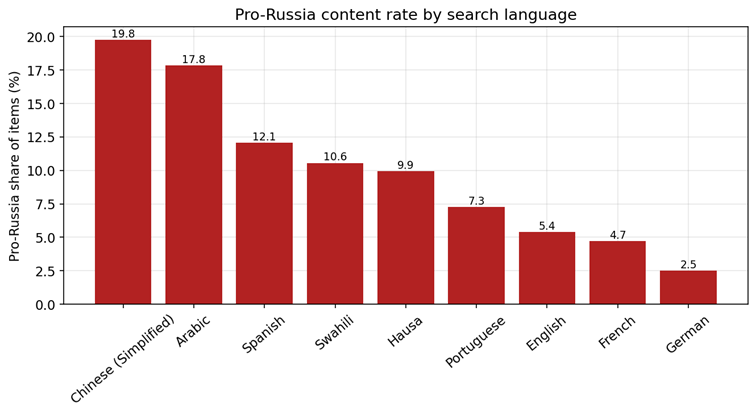
Figure 1. Pro-Kremlin saturation by language ecosystem.
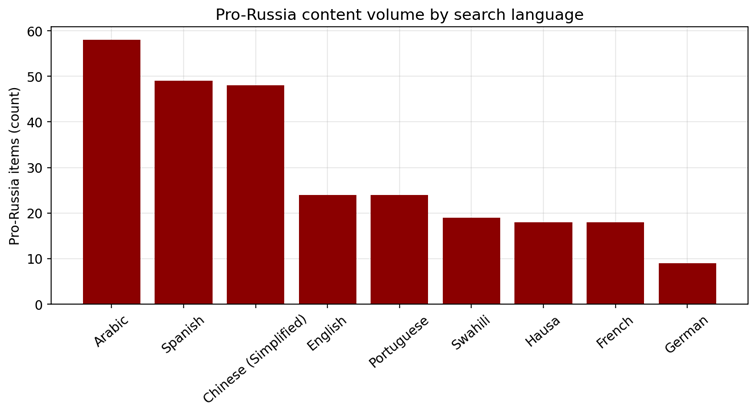
Figure 2. Pro-Kremlin content volume by language ecosystem.
5.2 Strategic efficiency analysis - the SILM model
Golden Owl frames targeting through the Strategic Influence Leverage Model (SILM), which expresses why certain ecosystems are prioritised:
Influence Potential = (Population Reach x Narrative Receptivity x Media Dependency x Geopolitical Alignment) / Localization Cost
- Population reach. Speakers addressable by a single localized narrative.
- Narrative receptivity. Pre-existing grievances or worldviews the narrative can attach to.
- Media dependency. Reliance on social and shared media ecosystems with limited independent verification.
- Geopolitical alignment. Existing anti-Western, non-aligned or multipolar orientation.
- Localization cost. The marginal cost of adapting a central narrative to the ecosystem - driven low by translation hubs, trained local voices and platform reach.
Scoring this study's ecosystems against the model (qualitative):
| Ecosystem | Reach | Receptivity | Media dep. | Alignment | Loc. cost | Leverage |
|---|---|---|---|---|---|---|
| Mandarin | High | High | High | High | Low | Very high |
| Arabic | High | High | High | High | Low | Very high |
| Spanish | Very high | High | High | Medium | Low | Very high |
| Swahili | Medium | High | High | High | Low | High |
| Hausa | Medium | High | High | High | Low | High |
| Portuguese | High | Medium | Medium | Medium | Low | Medium |
| French | High | Medium | Medium | Medium | Low | Medium |
| English | Very high | Low | Medium | Low | High | Low |
| German | Medium | Low | Medium | Low | High | Low |
Applying SILM qualitatively to this study's corpus, the Spanish, Arabic, Mandarin and African-language ecosystems score highest: large reach, strong receptivity, high media dependency and low localization cost - exactly where measured saturation is greatest. The model explains the observed gradient as rational optimization, not coincidence.
5.3 High-yield influence ecosystems
Spanish-speaking world (~600M)
Characteristics: shared cross-border media ecosystems; historical anti-US sentiment; growing multipolar discourse; BRICS engagement.
Leverage: one localized narrative can influence twenty countries at once; second-largest pro-Kremlin volume in this study.
Francophone Africa (~300M)
Characteristics: strong anti-colonial sentiment; Russian security partnerships; low-cost amplification through local intermediaries.
Leverage: a dedicated regional apparatus converts modest investment into high reach across the Sahel.
Arab world (~470M)
Characteristics: historical distrust of Western interventions; high geopolitical engagement; established Arabic-language state distribution.
Leverage: highest measured saturation after Mandarin (17.8%).
BRICS / multipolar environments
Characteristics: multipolar narratives; economic-sovereignty discourse; anti-sanctions positioning; syndication via shared media networks.
Leverage: the ideological frame that binds tactical narratives into a single worldview.
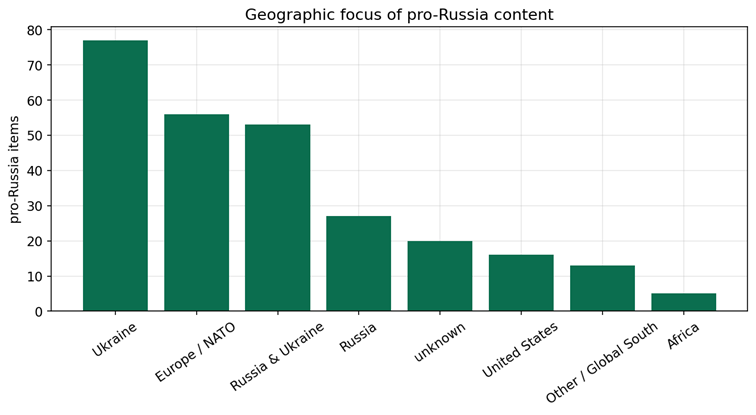
Figure 3. Geographic focus of pro-Kremlin content.
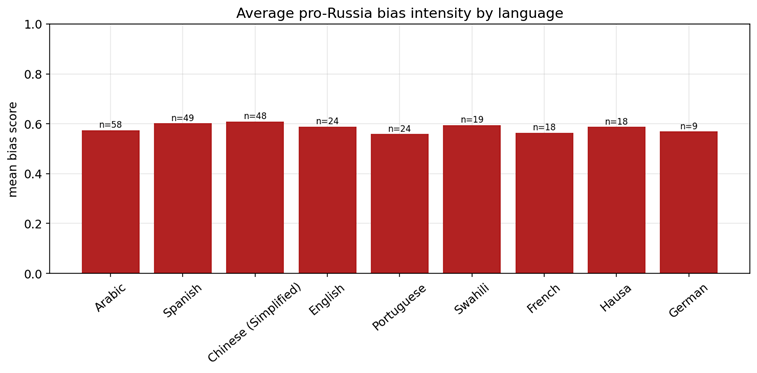
Figure 4. Bias intensity by ecosystem (effort signal).
VI. Narrative Architecture
Rather than a flat list of themes, the messaging is best read as a layered architecture in which strategic claims are carried by emotional and identity frames and sealed with legitimization devices.
| Narrative (clustered) | Items | Languages |
|---|---|---|
| Information-warfare framing | 139 | 9 |
| Peace only on Russia's terms / blame Ukraine | 113 | 9 |
| Ukraine collapse / Russian inevitability | 105 | 9 |
| NATO / West provocation & expansion | 94 | 9 |
| Zelensky illegitimate / puppet / proxy | 47 | 8 |
| Sanctions backfire / Western self-harm | 44 | 9 |
| Multipolar order / resurgent great power | 25 | 7 |
| Whataboutism / historical justification | 12 | 7 |
| Denazification / Nazi framing | 5 | 3 |
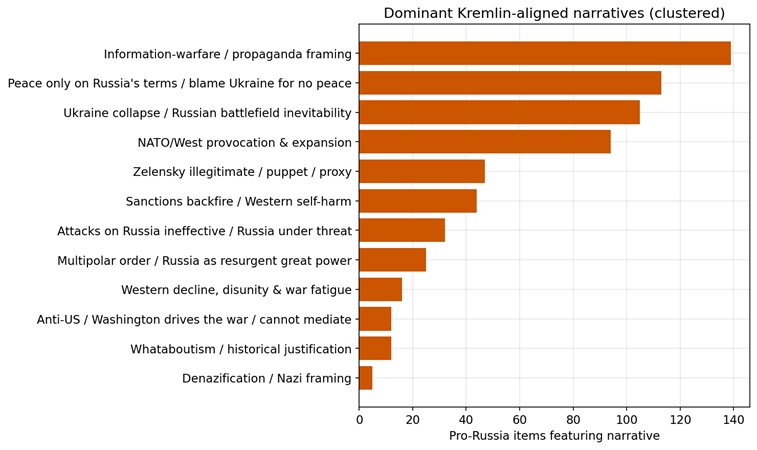
Figure 5. Dominant clustered narratives.
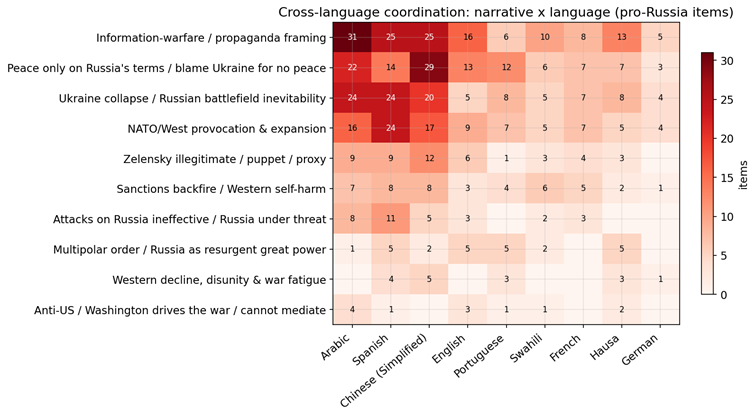
Figure 6. Narrative reach across language ecosystems.
6.1 Strategic narratives
The load-bearing claims that justify the war and erode support for Ukraine: NATO aggression and provocation; Western hypocrisy; multipolarity; Ukraine corruption and an 'illegitimate' leadership; and sanctions failure. These dominate the corpus and recur across eight or nine languages.
Representative messaging:
“putting forward what the Kremlin frames as a 'final offer' to end the conflict in Ukraine.”
- English | youtube.com | bias 0.66
“PUTIN ACUSA A LA OTAN | Advierte que los aliados se preparan para una guerra contra él”
- Spanish | youtube.com | bias 0.58
6.2 Emotional narratives
The affective carriers that make strategic claims stick: war fatigue, fear, economic suffering and anti-elite resentment. The engineered emotional profile of the corpus is dominated by anger, fear, frustration and suspicion.
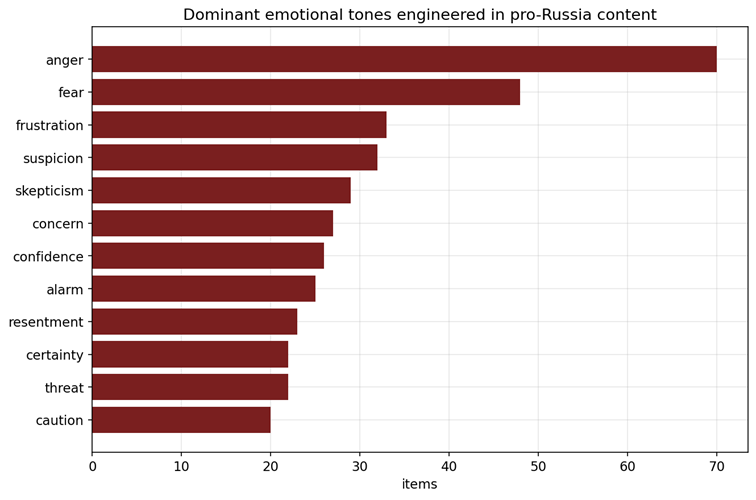
Figure 7. Engineered emotional tones.
Representative messaging:
“Rusia vuelve al centro del tablero geopolítico tras revelar contactos y conversaciones con actores europeos en torno a la guerra de Ucrania.”
- Spanish | youtube.com | bias 0.55
“Rusia quiere que Ucrania salga adelante”
- Spanish | fundacionsistema.com | bias 0.56
6.3 Identity narratives
The belonging frames that convert foreign messaging into in-group sentiment: anti-colonialism, civilizational sovereignty and traditional values - especially potent in Global-South ecosystems.
Representative messaging:
“Rusia vuelve al centro del tablero geopolítico tras revelar contactos y conversaciones con actores europeos en torno a la guerra de Ucrania.”
- Spanish | youtube.com | bias 0.55
“The Donbas campaign should be taught as an archetype campaign in strategy courses, war colleges, and general staff colleges because of the masterful way in which Russian commanders understood their strategic goals.”
- English | warontherocks.com | bias 0.7
6.4 Legitimization narratives
The devices that manufacture credibility: claims of broad international support, BRICS solidarity, and expert or academic endorsement - the rhetorical seal that presents engineered consensus as organic.
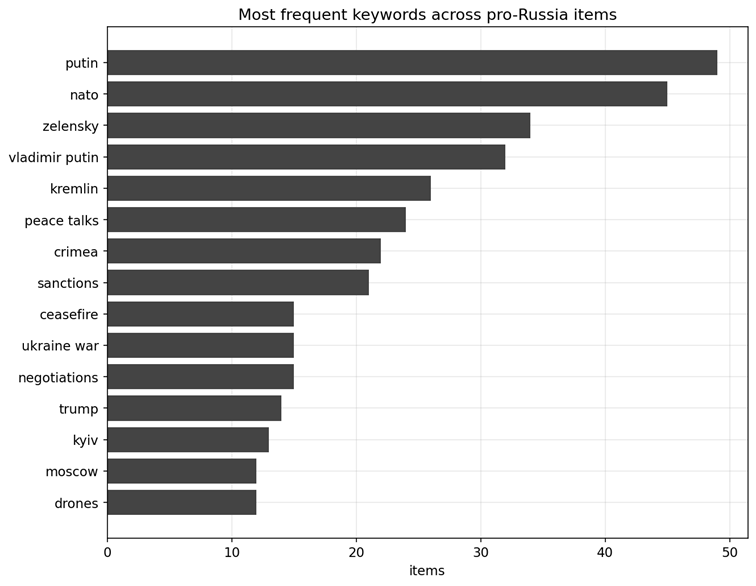
Figure 8. Most frequent keywords across pro-Kremlin items.
VII. Coordination Analysis: Evidence of a Single Architecture
Independent reporting in nine languages does not converge by chance. Five quantitative signatures, taken together, are not reproducible without central coordination.
7.1 Narrative co-occurrence - templated bundles
Items carry recurring BUNDLES of narratives far more often than chance. The strongest pairings:
| Narrative A | Narrative B | Items sharing both |
|---|---|---|
| UA collapse | Info-warfare framing | 55 |
| NATO provocation | Info-warfare framing | 49 |
| NATO provocation | UA collapse | 48 |
| Peace on RU terms | Info-warfare framing | 48 |
| Peace on RU terms | UA collapse | 38 |
| NATO provocation | Peace on RU terms | 37 |
| Peace on RU terms | Zelensky illegit. | 30 |
| Zelensky illegit. | Info-warfare framing | 22 |
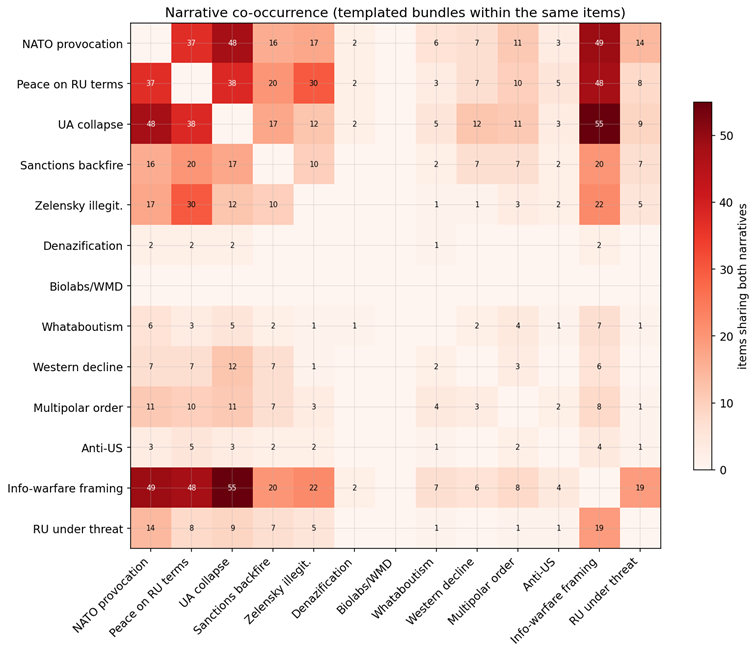
Figure 9. Narrative co-occurrence (templated bundles).
7.2 Message-feature clustering - one playbook, nine ecosystems
Encoding each item by narratives, blame targets and sentiment and reducing to two dimensions shows the languages thoroughly intermixed. Every cluster spans 8-9 languages.
| Cluster | Items | Languages | Defining narratives |
|---|---|---|---|
| C4 | 61 | 9 | Info-warfare framing, Peace on RU terms, RU under threat |
| C2 | 60 | 9 | NATO provocation, Peace on RU terms, UA collapse |
| C3 | 51 | 9 | Info-warfare framing, Peace on RU terms, UA collapse |
| C1 | 49 | 9 | UA collapse, Info-warfare framing, NATO provocation |
| C0 | 46 | 8 | Peace on RU terms, Zelensky illegit., UA collapse |
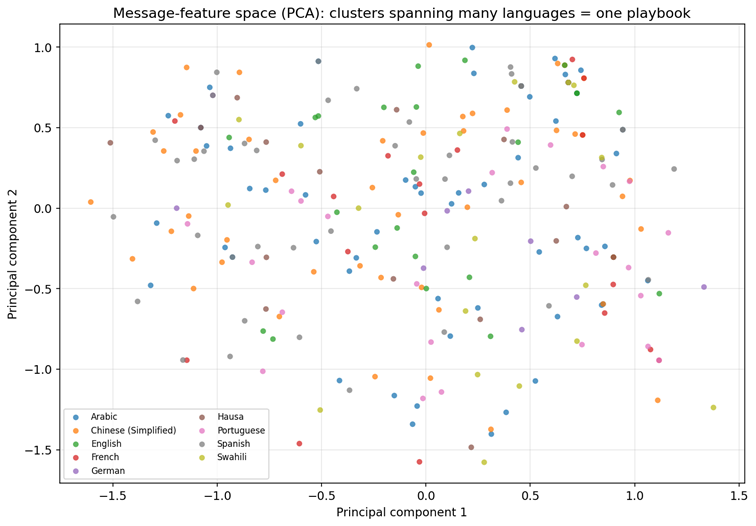
Figure 10. Message-feature space: multilingual clusters = one playbook.
7.3 Message-template clones and lexical signatures
Identical narrative bundles reappear as message-template clones across outlets and languages (9 detected, each present in >=4 items, >=3 domains and >=2 languages). The same Kremlin-coined vocabulary recurs across languages - the fingerprint of a shared script.
| Signature phrase | Items | Languages |
|---|---|---|
| NATO provocation/expansion | 34 | 6 |
| multipolar world | 9 | 6 |
| special military operation | 8 | 6 |
| puppet / proxy regime | 6 | 6 |
| sanctions backfire | 11 | 4 |
| denazification / neo-Nazi | 4 | 2 |
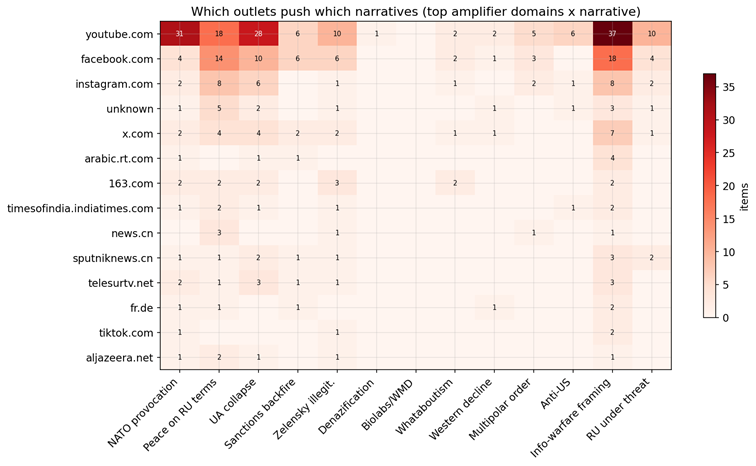
Figure 11. Which outlets carry which narratives.
7.4 Temporal pacing
Among the 77 dated items, leading narratives rise and fall together month to month rather than independently - a marker of coordinated tempo.
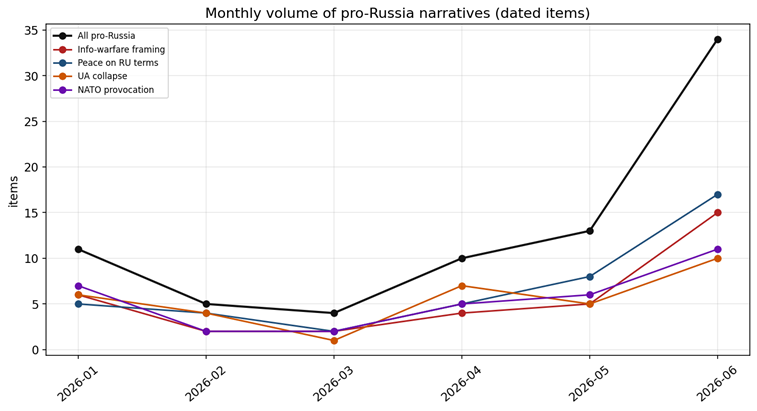
Figure 12. Monthly volume of leading narratives.
VIII. Localization Mechanisms
Localization is what distinguishes a sophisticated influence architecture from simple translation. The same strategic narrative is re-framed to attach to each ecosystem's specific grievances - the central message is constant, the wrapper is bespoke.
| Ecosystem | Localized frame |
|---|---|
| Spanish (Latin America) | Anti-imperialism; resistance to US hegemony; multipolar solidarity |
| Arabic (MENA) | Resistance to Western intervention; double standards of the West |
| Francophone Africa | Post-colonial liberation; expulsion of former colonial powers |
| English (global) | Free speech, anti-establishment politics, war fatigue, 'wasted' aid |
| German (Central Europe) | Economic costs, energy prices and sanctions self-harm |
| Chinese (Mandarin) | Multipolar order; Western containment as the true cause |
| Swahili / Hausa (Africa) | Sovereignty and security partnership; anti-Western framing |
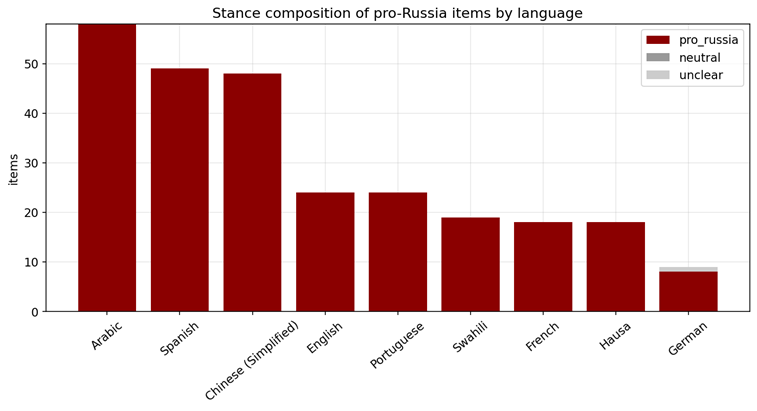
Figure 13. Stance composition by ecosystem.
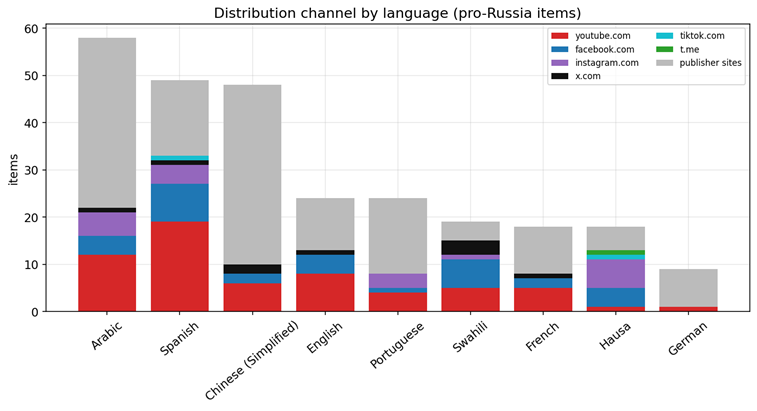
Figure 14. Distribution channel by ecosystem.
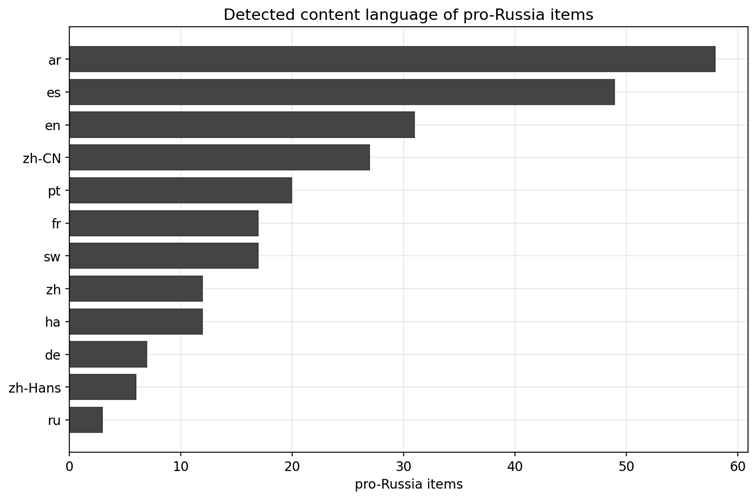
Figure 15. Detected content language of pro-Kremlin items.
Per-ecosystem profiles (within the pro-Kremlin subset) confirm distinct local signatures of volume, intensity, dominant narratives and preferred channels:
Arabic
Volume: 58 items. Mean bias: 0.57. Coordinated-amplification share: 38%.
- Dominant narratives: Info-warfare framing (31), UA collapse (24), Peace on RU terms (22), NATO provocation (16)
- Primary nodes: youtube.com (12), arabic.rt.com (5), unknown (5), instagram.com (5), facebook.com (4)
- Localization: Anchored by long-running Arabic state distribution (since 2007); high engagement, regional re-publication.
Spanish
Volume: 49 items. Mean bias: 0.60. Coordinated-amplification share: 67%.
- Dominant narratives: Info-warfare framing (25), NATO provocation (24), UA collapse (24), Peace on RU terms (14)
- Primary nodes: youtube.com (19), facebook.com (8), instagram.com (4), telesurtv.net (3), vietnam.vn (2)
- Localization: Very large cross-border reach with a trained local-creator layer; anti-imperialist framing.
Chinese (Simplified)
Volume: 48 items. Mean bias: 0.61. Coordinated-amplification share: 21%.
- Dominant narratives: Peace on RU terms (29), Info-warfare framing (25), UA collapse (20), NATO provocation (17)
- Primary nodes: youtube.com (6), 163.com (5), news.cn (3), sputniknews.cn (3), zhuanlan.zhihu.com (2)
- Localization: Amplified via state services and large domestic portals; multipolar framing.
English
Volume: 24 items. Mean bias: 0.59. Coordinated-amplification share: 54%.
- Dominant narratives: Info-warfare framing (16), Peace on RU terms (13), NATO provocation (9), Zelensky illegit. (6)
- Primary nodes: youtube.com (8), facebook.com (4), timesofindia.indiatimes.com (3), warontherocks.com (1), uzdaily.uz (1)
- Localization: Best-defended ecosystem; lowest saturation; used for 'authority' and reach.
Portuguese
Volume: 24 items. Mean bias: 0.56. Coordinated-amplification share: 33%.
- Dominant narratives: Peace on RU terms (12), UA collapse (8), NATO provocation (7), Info-warfare framing (6)
- Primary nodes: youtube.com (4), instagram.com (3), unknown (3), brasildefato.com.br (2), assets.marinha.mil.br (1)
- Localization: Brazil and Lusophone Africa; supported by a Portuguese broadcasting push.
Swahili
Volume: 19 items. Mean bias: 0.60. Coordinated-amplification share: 79%.
- Dominant narratives: Info-warfare framing (10), Sanctions backfire (6), Peace on RU terms (6), UA collapse (5)
- Primary nodes: facebook.com (6), youtube.com (5), x.com (3), jamiiforums.ke (1), bbc.com (1)
- Localization: Priority growth market with a dedicated editorial centre; social-first delivery.
French
Volume: 18 items. Mean bias: 0.56. Coordinated-amplification share: 44%.
- Dominant narratives: Info-warfare framing (8), NATO provocation (7), Peace on RU terms (7), UA collapse (7)
- Primary nodes: youtube.com (5), facebook.com (2), x.com (1), afrik.com (1), sherpas.com (1)
- Localization: Francophone Europe and especially the Sahel, where the regional apparatus is most active.
Hausa
Volume: 18 items. Mean bias: 0.59. Coordinated-amplification share: 72%.
- Dominant narratives: Info-warfare framing (13), UA collapse (8), Peace on RU terms (7), NATO provocation (5)
- Primary nodes: instagram.com (6), facebook.com (4), arewa.ng (1), sputniknews.in (1), t.me (1)
- Localization: Sahel-facing market served by a dedicated regional apparatus.
German
Volume: 9 items. Mean bias: 0.57. Coordinated-amplification share: 11%.
- Dominant narratives: Info-warfare framing (5), NATO provocation (4), UA collapse (4), Peace on RU terms (3)
- Primary nodes: fr.de (3), welt.de (1), table.media (1), tvp.info (1), riffreporter.de (1)
- Localization: Heavily defended; lowest saturation; a persistent target of cloned-outlet operations.
IX. The Influence Architecture Model
Synthesising the data and the documented operations, the system can be read as a layered architecture of functional nodes. Each layer below is mapped to evidence from this study and to independently-documented infrastructure.
9.1 Seed nodes
Russian state institutions and official statements set the central line, carried by state international outlets. In our data the most-amplified voices are Kremlin officials (Putin 122, Peskov 22, Lavrov 8), and state outlets appear directly among the source domains.
9.2 Translation nodes
Language-adaptation hubs convert the central line into each ecosystem: Arabic, Spanish, Portuguese, French and African-language services, plus newly-opened editorial centres. These hubs are what make nine-language simultaneity possible.
9.3 Legitimization nodes
Experts, academics, journalists and local political actors lend credibility - an oligarch-funded ideological hub network exports the 'multipolar' frame, and thousands of trained journalists and local creators provide trusted-looking voices.
9.4 Amplification nodes
Distributed amplification mechanisms on Telegram, X, Facebook, YouTube and TikTok carry the message: 46% of pro-Kremlin items in our data sit on these platforms, with single platforms spanning up to nine languages.
9.5 Narrative-laundering nodes
Centrally-produced messaging is transformed into apparently local, independent opinion - through sponsored 'press tours', local re-publication and creator networks - so the audience perceives organic consensus rather than a foreign campaign.
9.6 AI-contamination nodes
The newest layer engineers content specifically to be ingested by automated knowledge systems: search-ranking manipulation, content farms, large-scale website replication and contamination of AI training and retrieval data. This is examined in Section XI.
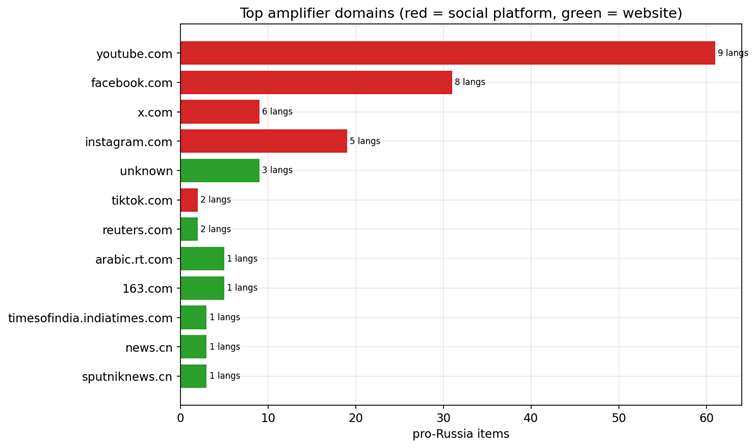
Figure 16. Amplification nodes - top domains (platforms vs. publishers).
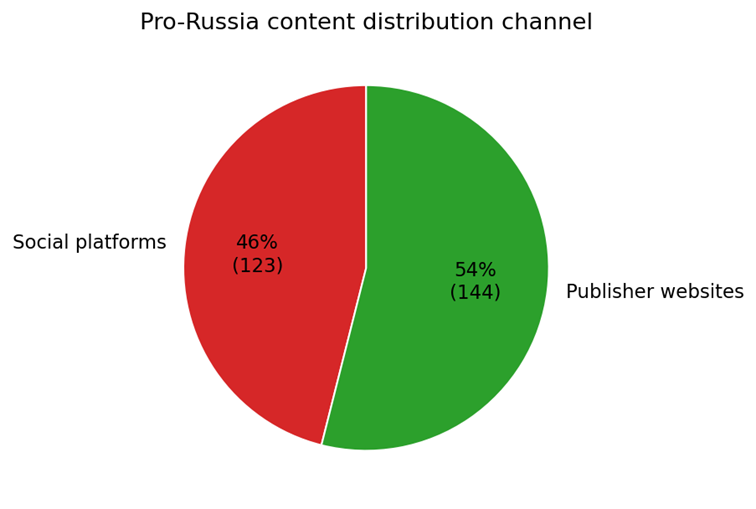
Figure 17. Channel concentration of pro-Kremlin content.
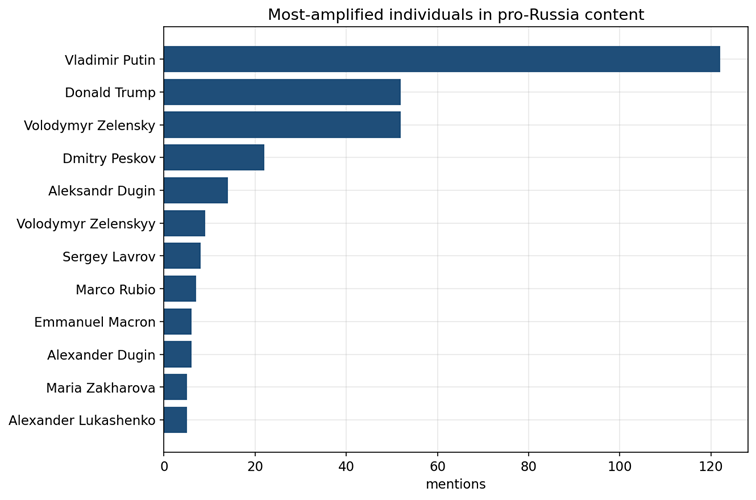
Figure 18. Seed/legitimization - most-amplified individuals.
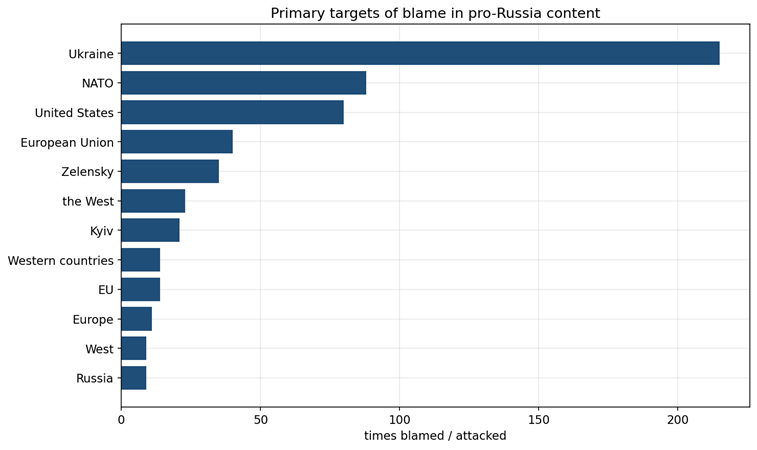
Figure 19. Primary targets of blame.
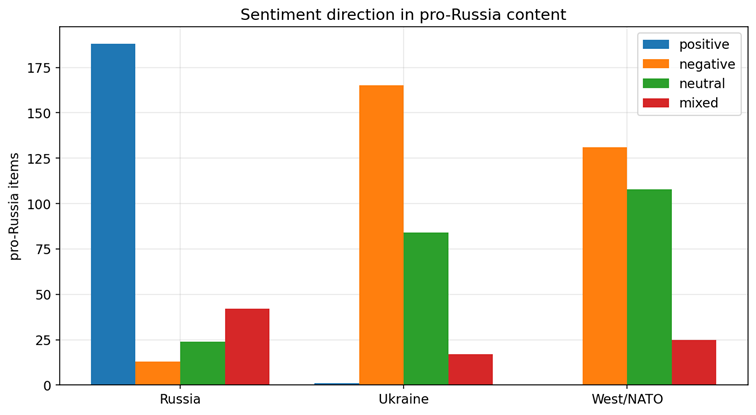
Figure 20. Sentiment vector toward Russia / Ukraine / West.
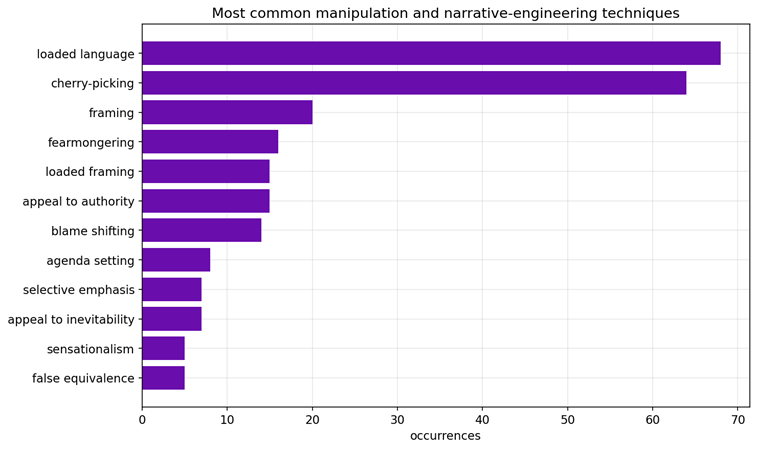
Figure 21. Manipulation and narrative-engineering techniques.
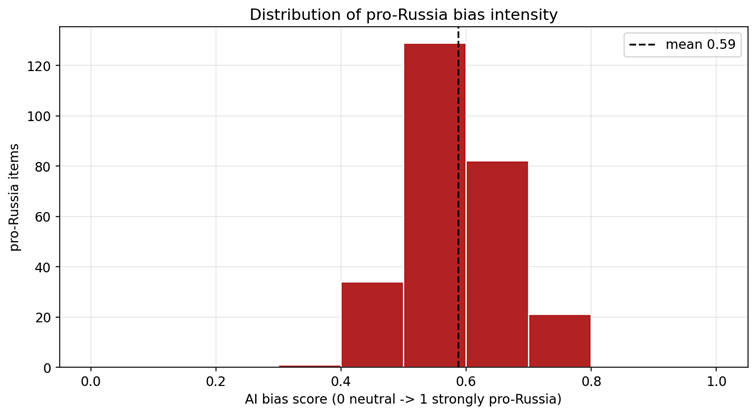
Figure 22. Distribution of bias intensity.
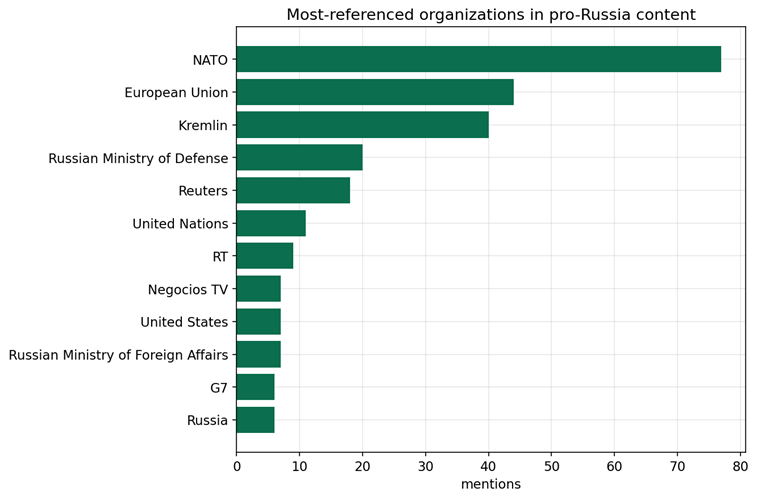
Figure 23. Most-referenced organizations.
X. The Russian Influence Ecosystem (Independent Corroboration)
The patterns measured here map onto named, independently-documented operations and infrastructure - the convergence that supports attribution to a centrally-directed architecture.
- Multilingual state-media build-out. New language services rolled out on a schedule (Arabic, Chinese, Portuguese into Mozambique/Angola, an Amharic centre, a planned Urdu service), tens of thousands of journalists trained through state programmes, and 200+ syndication partners across 114 countries - the translation layer of the architecture.
- Content-flooding network ('Portal Kombat'). A multilingual network reported to have published millions of low-quality articles repackaging state messaging, explicitly engineered for discoverability by automated systems.
- Cloned-outlet and impersonation operations. A sanctioned design firm clones legitimate Western outlets to launder narratives; dozens of domains have been seized and blocked, and tens of thousands of coordinated channels removed by platforms.
- Fabrication operations. High-volume operations manufacture fabricated videos and impersonate media and experts using AI-generated audio, linked to dozens of viral hoaxes - many targeting Ukraine's leadership - across Europe and the Americas.
- AI-generated site farms. Networks reported to operate hundreds of AI-generated false outlets and, per leaked documents surfaced in 2026, thousands of fabricated websites and reference-site clones designed to manipulate search and automated answers.
- Dedicated African apparatus. A state-linked African agency with Sahel offices, multilingual output and journalist 'press tours' - the upstream of the Swahili/Hausa/French-African footprint.
- Syndication broker (TV BRICS). A sanctions-linked network with 40+ partner institutions across Africa, Asia and Latin America, repackaging content under a multipolar banner.
- Ideological hub network. An oligarch-funded cluster produces and exports the neo-Eurasianist 'multipolar' framing detected across seven languages in our data.
10.1 Amplifier-node verification
| Node (domain) | In our data | Assessed nature |
|---|---|---|
| youtube / facebook / x / instagram / tiktok | social, 6-9 langs | Distributed amplification mechanisms (primary laundering surface) |
| arabic.rt.com | Arabic | Russian state international broadcaster (Arabic service) |
| sputniknews.cn | Chinese | Russian state news service (Chinese) |
| news.cn / 163.com / thepaper.cn | Chinese | State agency / large domestic portals |
| telesurtv.net | Spanish | State-funded Latin-American outlet, frequently Russia-aligned |
| brasildefato / ocafezinho | Portuguese | Brazilian outlets recurrently carrying the line |
| skynewsarabia / aa.com.tr / alkhaleej | Arabic | Regional publishers republishing official statements |
XI. Risks to AI and Decision Systems
The most consequential evolution of this architecture is that it no longer targets only human perception - it targets the automated systems through which humans increasingly obtain knowledge. This is the frontier where influence operations and machine-mediated information integrity converge.
11.1 AI-mediated knowledge risks
By saturating the open web with engineered narratives - through content farms, replicated websites and search-ranking manipulation - the architecture causes automated knowledge systems to ingest and re-serve those narratives. The downstream effects are:
- Distorted retrieval. Automated retrieval and answer systems surface engineered content as if it were representative.
- Biased automated outputs. AI systems trained or grounded on contaminated data reproduce the narratives, lending them machine authority.
- Artificial consensus. Volume is mistaken for agreement, manufacturing the appearance of a settled view inside automated systems.
- Contamination of automated intelligence. Monitoring and analytic systems that rely on open data inherit the bias, degrading the very tools meant to detect it.
Independent audits have already observed automated answer systems repeating fabricated claims traceable to these networks, with the share of such claims rising year on year - direct evidence that the contamination layer works as designed.
11.2 Strategic implications
Decision-makers increasingly rely on AI copilots, automated retrieval and answer systems, and automated monitoring. When the underlying public information ecosystem is engineered, the integrity of these systems - and the decisions built on them - is directly at risk. The integrity of public information therefore becomes a national-security issue, not merely a media-quality concern.
This is precisely the problem space of a reflective intelligence operating system: pairing automated scale with human validation, modelling the influence architecture rather than chasing individual items, and continuously monitoring the leverage points where contamination enters.
XII. Analytic Assessment
Six independent signatures converge: (1) the same twelve narratives recur across languages, six in eight or nine; (2) every message-feature cluster spans 8-9 languages; (3) identical narrative bundles and coined vocabulary reappear across outlets and languages; (4) a single bias vector - 70% pro-Russia, overwhelmingly anti-Ukraine and anti-West; (5) shared amplification rails weighted toward under-defended ecosystems; and (6) convergence with named, documented operations.
No single signature proves coordination. Together they are not reproducible by independent journalism. Independent outlets in nine languages do not spontaneously converge on the same narrative bundles, vocabulary, blame structure, emotional engineering, localized frames and channels, weighted toward the same ecosystems, while matching documented operations.
Assessment: We assess with high confidence that the pro-Kremlin content captured in this 2026 corpus is the output of a deliberate, multilingual influence architecture aligned with Russian state interests, optimized for strategic efficiency rather than maximum volume, and engineered to manufacture legitimacy across linguistic, geopolitical and algorithmic ecosystems.
XIII. Alternative Hypotheses and Confidence
- Organic convergence - rejected (high confidence). Genuine convergence would not yield a 70% one-directional bias vector, identical narrative bundles across 8-9 languages, shared coined vocabulary, localized-but-identical frames, and clusters that are all multilingual.
- Classification artifact - unlikely (moderate-high). Patterns persist across independent signals (sentiment, targets, techniques, domains, lexicon, clustering) and match externally-documented operations.
- Opportunistic local echoing - partially true, not exclusive. Some amplification is by sympathetic local actors - but that is precisely the documented narrative-laundering mechanism, not a counter-explanation.
Residual uncertainty is dominated by under-counting of closed channels, which would strengthen, not weaken, the conclusion.
XIV. Strategic Recommendations and Early-Warning Indicators
- Monitor the architecture, not just content: map seed-translation-laundering-amplification pathways.
- Cross-language co-occurrence tripwires: flag when one narrative jumps to five or more ecosystems in a short window.
- Cluster-spread alerts: detect a new message-feature cluster appearing in many languages at once.
- Lexical-signature watch: track Kremlin-coined phrases across languages as early campaign signals.
- Leverage-point defence: prioritise Arabic, Spanish, Mandarin and African ecosystems where SILM is highest.
- Protect the AI layer: audit automated retrieval/answer systems for contamination; pair automation with human validation.
- Continuous baselining: re-run the pipeline periodically to make spikes and migrations visible.
XV. Conclusions
The Russian Federation does not merely disseminate narratives about Ukraine. It operates a mature influence architecture optimized for strategic efficiency rather than maximum volume - one that constructs multilingual infrastructures of legitimacy tuned to linguistic reach, geopolitical receptivity and operational cost, enabling relatively modest investment to generate disproportionate influence across global information ecosystems.
The future battlefield is not information abundance, but the capacity to manufacture legitimacy across linguistic, geopolitical and algorithmic ecosystems. The same architecture that shapes human perception now reaches into the automated systems that mediate knowledge, making the integrity of public information a security concern in its own right.
Final thesis: The Russian Federation constructs multilingual infrastructures of legitimacy optimized according to linguistic reach, geopolitical receptivity, and operational efficiency, enabling relatively modest investments to generate disproportionate influence across global information ecosystems. Intelligence systems must therefore evolve from content detection toward continuous monitoring of influence architectures, localization mechanisms, and strategic leverage points.
XVI. Glossary
· Influence architecture - the end-to-end system that produces, translates, legitimizes, launders and amplifies state-aligned narratives at scale.
· Narrative infrastructure - the durable outlets, hubs and networks that carry narratives across ecosystems and over time.
· Cognitive operations - activity aimed at shaping perception and decision-making of publics, institutions and automated systems.
· Coordinated amplification ecosystem - the platform and account environment through which a message is mechanically multiplied across languages.
· Narrative engineering - the deliberate construction and framing of misleading narratives (in place of the term 'fake news').
· Narrative laundering - transforming central messaging into apparently local, independent opinion.
· Distributed amplification mechanisms - networked accounts and channels used to multiply reach.
· SILM - Strategic Influence Leverage Model: influence potential as reach x receptivity x media dependency x alignment, divided by localization cost.
· FIMI - Foreign Information Manipulation and Interference.